

Grazing platters are designed for casual consumption, making them well-suited for informal settings and events where movement and interaction are encouraged. Their appeal lies in visual presentation and the range of small, shareable items they contain. Full meals, in contrast, are structured to provide sustained nourishment through measured portions and defined food groups.
The primary difference lies in intent. Grazing platters serve to facilitate social engagement and visual appeal. Full meals prioritise satiety, structure, and dietary balance.
Volume and Satiety
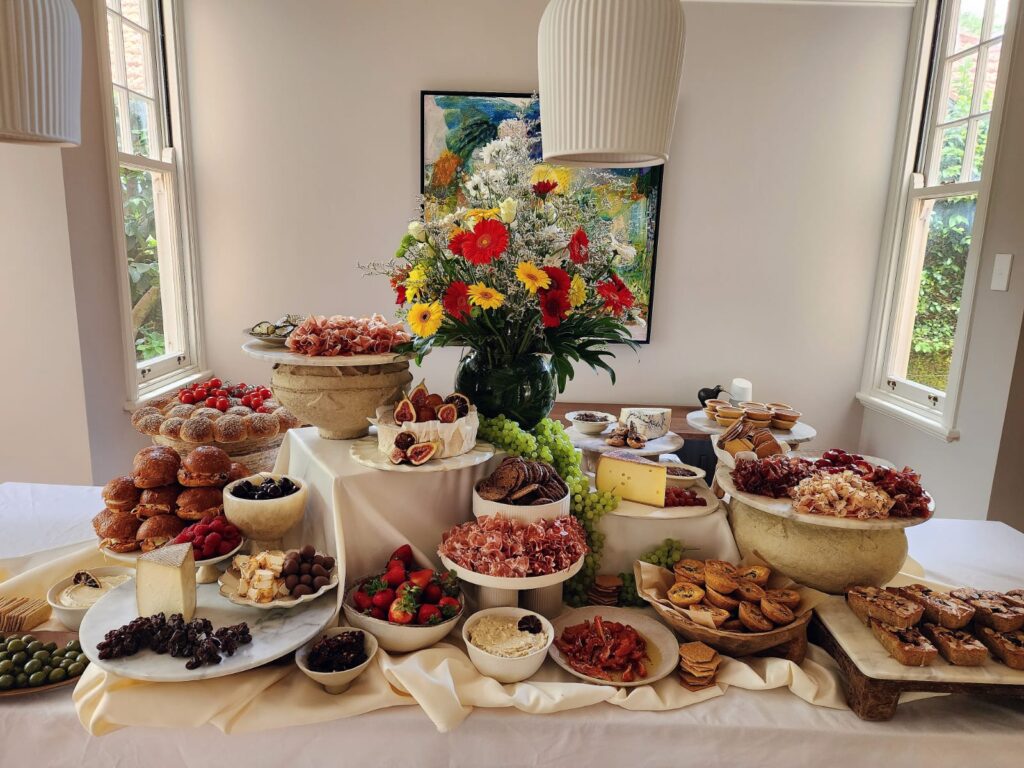
One of the key challenges in substituting a full meal with a grazing platter is the inconsistency in portion size. Plated meals deliver a clear quantity per person, while platters rely on shared consumption that may not provide enough for every guest, particularly at longer or more formal events.
Standard grazing platters often include:
- Assorted cheeses and cured meats
- Crackers, bread, and dips
- Fresh and dried fruits
While visually abundant, these items are not typically scaled to meet individual caloric needs unless specifically customised. In most cases, the platter is intended to serve as an accompaniment rather than a standalone meal.
Nutritional
Nutritional adequacy is another critical factor. Full meals are built around a balance of protein, fibre, carbohydrates, and essential micronutrients. Grazing platters, however, often overrepresent high-fat and high-sodium items with limited inclusion of vegetables or plant-based proteins.
To serve as a meal substitute, a platter should be diversified beyond standard inclusions. A balanced version may feature:
- Grilled or raw vegetables (e.g., carrots, cucumbers, capsicum)
- Legumes or plant-based proteins (e.g., hummus, chickpeas)
- Whole grain crackers or breads
Without these adjustments, guests may experience a lack of satiety or uneven energy intake, especially in events exceeding two hours.
Event
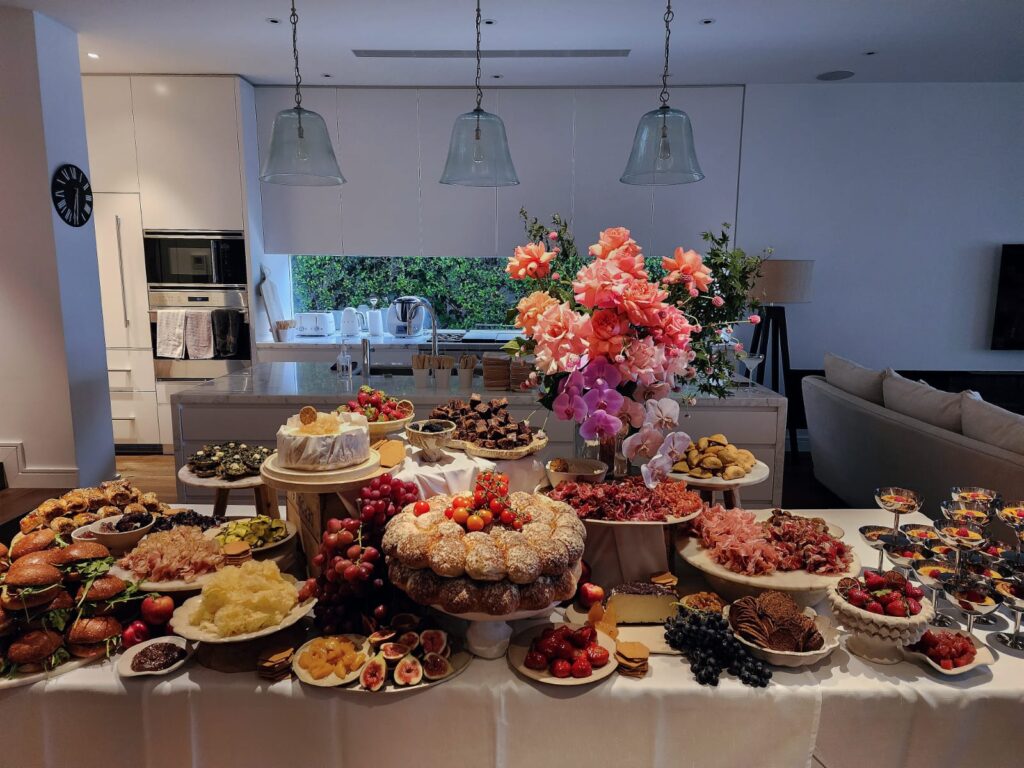
The suitability of grazing platters as a full meal also depends on the event structure. Short-duration events or social settings are typically ideal due to the platter’s flexibility. Guests can eat informally and return to the table as needed.
However, for events such as corporate luncheons, formal receptions, or training sessions with fixed breaks, full meals are often expected. In these cases, grazing platters should only be used if they are custom-built with sufficient quantity and variety.
Key factors to assess before choosing a platter as the main food service include:
- Duration of the event
- Time of day (e.g., midday vs. early evening)
- Guest expectations and dietary needs
Operational
From a planning perspective, using a grazing platter as a meal requires attention to logistics. Portioning, dietary labelling, and allergen control must be addressed with the same level of detail as formal catering options.
Insight 1: When using a platter to replace a meal, calculate portions based on full meal equivalents per person, including sufficient protein and fibre sources.
Insight 2: Use grazing platters for short, informal events; reserve plated or buffet meals for structured, longer sessions.
Insight 3: Always include at least one vegetable, one whole grain, and one protein source to support balance and variety.
Grazing platters offer flexibility and strong visual appeal but are not automatically a substitute for full meals. For them to meet the standards of a traditional food service, adjustments in quantity and nutritional content are essential. Their use should be guided by event type, guest expectations, and duration. When planned appropriately, they can meet both visual and dietary needs—but only under the right conditions.


